


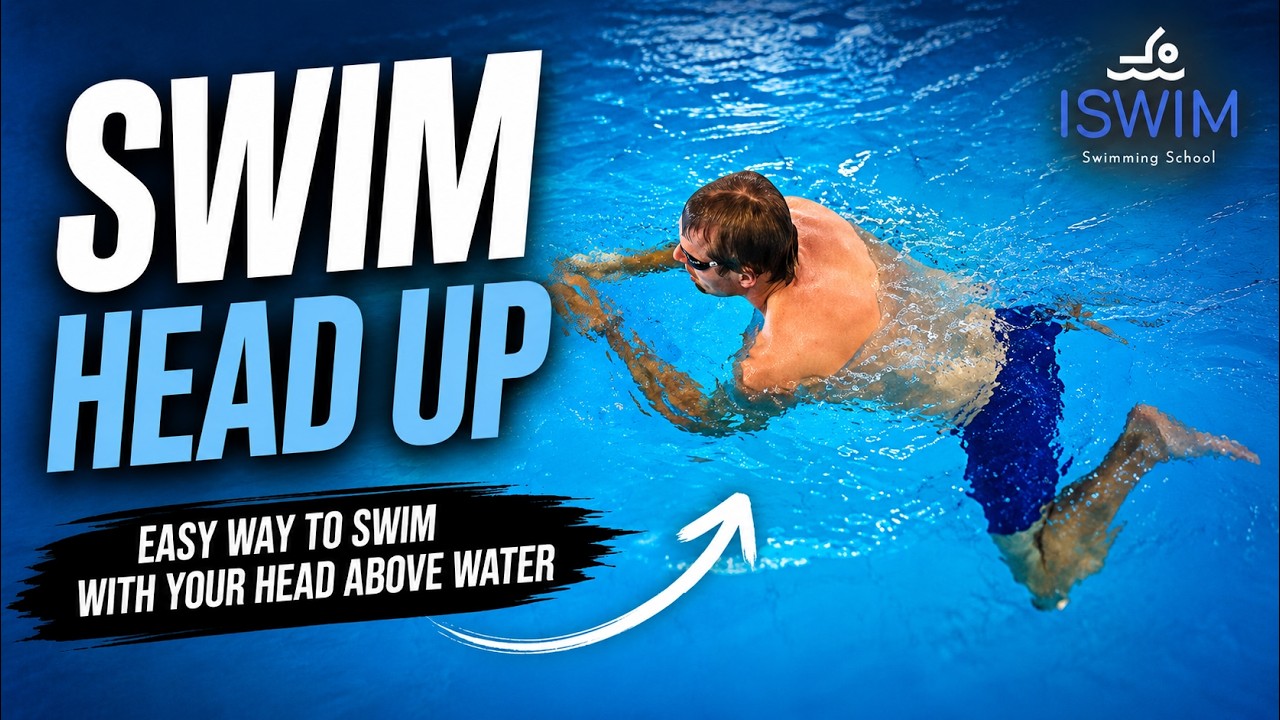
How to Swim Without Putting Your Face in the Water

This ISWIM video lesson explains how to swim without putting your face in the water with a clear demonstration and practical coaching points. Use the video together with the notes below to understand the movement, recognise common mistakes and practise more purposefully.
How to swim without putting your face in the water
Learn how to swim with your head above water using a simple breaststroke technique designed for recreational swimmers and beginners. In this lesson, I’ll show you how to adjust your breaststroke timing, kick, and glide so you can keep your face out of the water while swimming. 🏊 Before you start: If you’re completely new to breaststroke, watch my full step-by-step breaststroke lesson first. It covers the kick, arm movement, breathing, coordination, and simple drills to help you learn the stroke from scratch.
In this lesson, you’ll learn: • Why your breaststroke kick needs to be effective • How to test your kick with a kickboard • How to practice head-up breaststroke with a pool noodle • How to adjust your timing • Why the glide is shorter with your head above water • How to coordinate your arms and legs • How to swim smoothly without putting your face in the water This is not competitive breaststroke. But for many recreational swimmers, keeping the head above water can be a comfortable and enjoyable way to swim — especially if you don’t feel comfortable putting your face underwater. 👍 If this lesson helped you, please like the video. 💬 Leave a comment and tell me what swimming skill you’d like to learn next. 🔔 Subscribe to ISWIM for more beginner swimming lessons and practical swimming skills. #LearnToSwim #SwimmingForBeginners #Breaststroke
Key Skills and Takeaways
Develop an effective breaststroke kick first
Use a kickboard to check whether the kick creates propulsion
Practise head-up breaststroke with a pool noodle
Shorten the glide while keeping the head above water
Coordinate the arms and legs without rushing
How to Practise
Master the kick before combining the full stroke
Keep the neck relaxed and look forward rather than upward
Use this as a recreational option while gradually building underwater comfort
Safety First
Head-up swimming can be tiring for the neck and lower back. Practise short distances in a supervised pool and stop if you feel strain or fatigue.
Frequently Asked Questions
Is this lesson suitable for beginners?
Yes. The video breaks the skill into manageable steps. Begin with the easiest supported version and progress only when you can stay relaxed and in control.
How often should I practise this skill?
Short, focused practice is usually more productive than repeating the skill until exhausted. Work on one or two details at a time and stop while you can still maintain calm breathing and good control.
Do I need a swimming instructor?
Video lessons can clarify technique and help you prepare, but an instructor can see your individual movement, correct unsafe habits and adapt the progression to your current ability.
Continue Learning with ISWIM
Use this lesson as one step in a wider learning plan. ISWIM offers structured swimming instruction for beginners, adults, children and experienced swimmers who want focused feedback on technique and water confidence.
Comments