


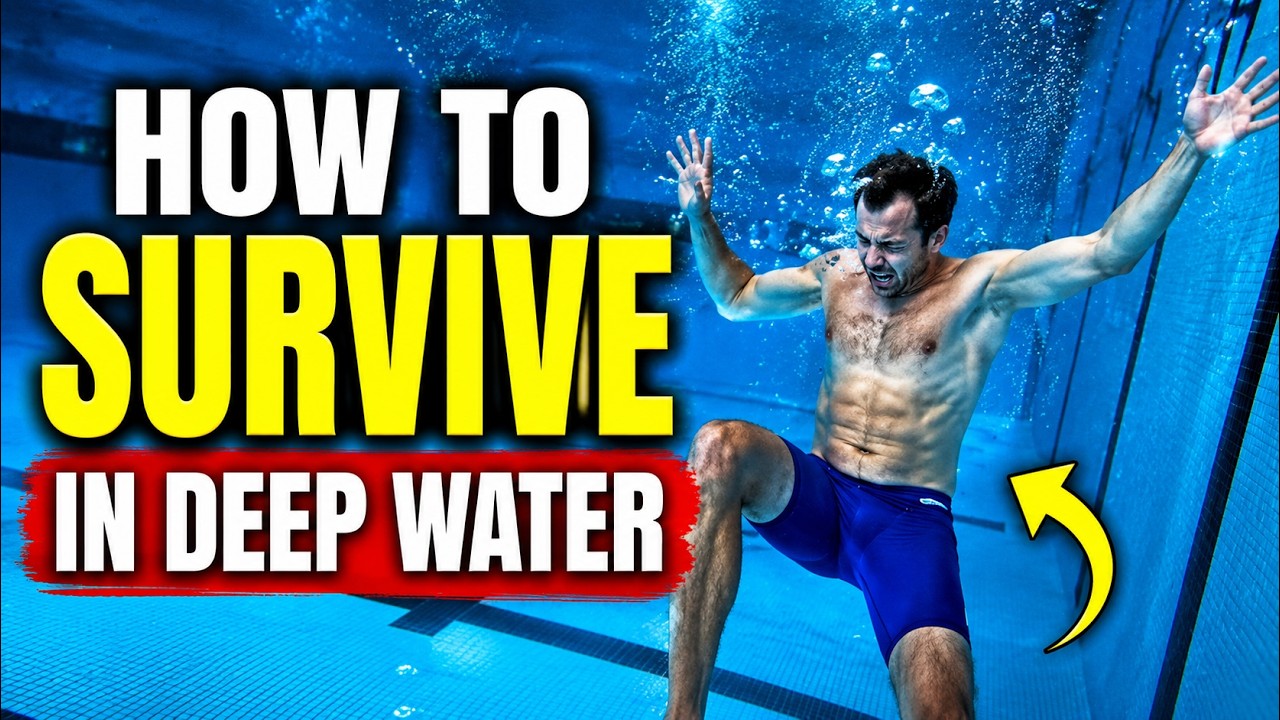
How to Stay Afloat in Deep Water and Conserve Energy

This ISWIM video lesson explains how to stay afloat in deep water with a clear demonstration and practical coaching points. Use the video together with the notes below to understand the movement, recognise common mistakes and practise more purposefully.
How to stay afloat in deep water
Learn how to stay afloat and survive in deep water, even if you are not a confident swimmer. In this beginner swimming lesson, Vladimir from ISWIM explains how breathing affects buoyancy and shows a simple survival position that helps you keep your face above the water, save energy, and call for help. You will see what happens when you hold a full breath, release half of the air from your lungs, and fully exhale. You will also learn how to turn onto your back, stay calm, and use gentle movements of your hands and legs to reach a nearby wall, float, boat, or another safe object. This lesson is helpful for anyone learning how to float, overcome a fear of deep water, improve water safety, or learn basic swimming survival skills. Always practise swimming and floating skills in a supervised pool with a qualified instructor or lifeguard present. Never practise alone. Share your experience in deep water or your questions in the comments below. Subscribe to the ISWIM YouTube channel for more beginner swimming lessons and practical water-safety tips. #HowToFloat #DeepWaterSurvival #LearnToSwim
Key Skills and Takeaways
Understand how breathing changes buoyancy
Roll onto the back to keep the airway clear
Use gentle hand and leg movements for support
Conserve energy while calling or moving toward safety
Stay calm and identify a wall, boat or flotation object
How to Practise
First practise the position in shallow water
Keep a normal breathing rhythm
Use small sculling movements instead of fighting the water
Safety First
Never practise deep-water survival skills alone. Use a supervised pool with a qualified instructor or lifeguard and remain within your current ability.
Frequently Asked Questions
Is this lesson suitable for beginners?
Yes. The video breaks the skill into manageable steps. Begin with the easiest supported version and progress only when you can stay relaxed and in control.
How often should I practise this skill?
Short, focused practice is usually more productive than repeating the skill until exhausted. Work on one or two details at a time and stop while you can still maintain calm breathing and good control.
Do I need a swimming instructor?
Video lessons can clarify technique and help you prepare, but an instructor can see your individual movement, correct unsafe habits and adapt the progression to your current ability.
Continue Learning with ISWIM
Use this lesson as one step in a wider learning plan. ISWIM offers structured swimming instruction for beginners, adults, children and experienced swimmers who want focused feedback on technique and water confidence.
Comments