


What to Do If You Fall Overboard: Survival Priorities

This ISWIM video lesson explains what to do if you fall overboard with a clear demonstration and practical coaching points. Use the video together with the notes below to understand the movement, recognise common mistakes and practise more purposefully.
What to do if you fall overboard
What should you do if you fall overboard and suddenly find yourself alone in the ocean?
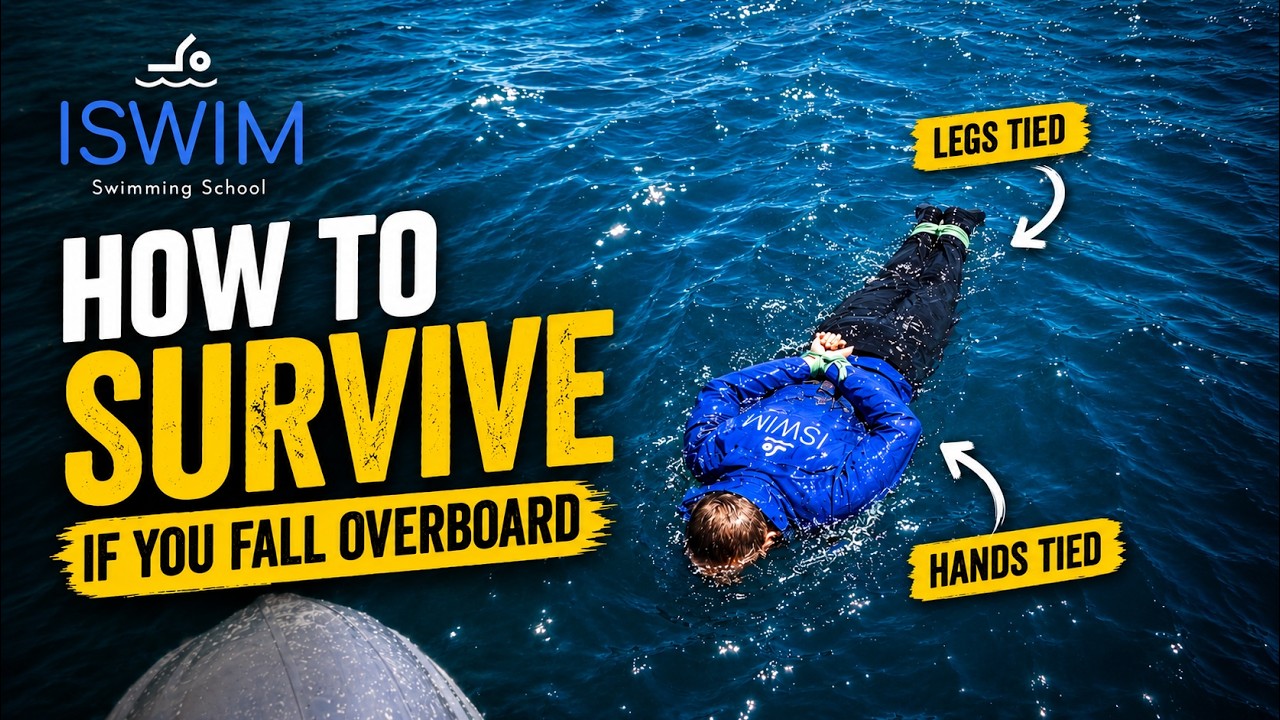
In this video, I demonstrate practical ocean-survival techniques for several situations: falling into the water in light clothing, falling fully dressed, and more difficult controlled demonstrations with restricted movement.
The final demonstrations were performed under controlled conditions with experienced people nearby. Do not attempt to recreate them. Having your hands or legs restricted in the water is extremely dangerous.
Key Skills and Takeaways
Control the first reaction and focus on breathing
Use natural buoyancy and roll onto your back when possible
Conserve energy instead of swimming without a clear destination
Assess nearby flotation, boats, shore and rescue options
Protect yourself from cold-water exposure
How to Practise
Make calm breathing your first task
Keep movements small and purposeful
Signal for help and remain with flotation or the vessel when appropriate
Safety First
The restricted-movement demonstrations were performed with experienced support under controlled conditions. Never recreate them. Real emergencies vary; follow local marine-safety guidance and wear a life jacket.
Frequently Asked Questions
Can this replace formal water-safety training?
No. The video is educational and helps explain useful principles, but it does not replace certified training, appropriate equipment or professional supervision.
How often should I practise this skill?
Short, focused practice is usually more productive than repeating the skill until exhausted. Work on one or two details at a time and stop while you can still maintain calm breathing and good control.
Do I need a swimming instructor?
Video lessons can clarify technique and help you prepare, but an instructor can see your individual movement, correct unsafe habits and adapt the progression to your current ability.
Continue Learning with ISWIM
Use this lesson as one step in a wider learning plan. ISWIM offers structured swimming instruction for beginners, adults, children and experienced swimmers who want focused feedback on technique and water confidence.
Comments